Gear Care October 23, 2024 7 min read
How to Keep Stickers on a Water Bottle
Vinyl, edge sealing, hand-washing and clean removal – what actually keeps stickers on a water bottle, and what to do when you want them off.
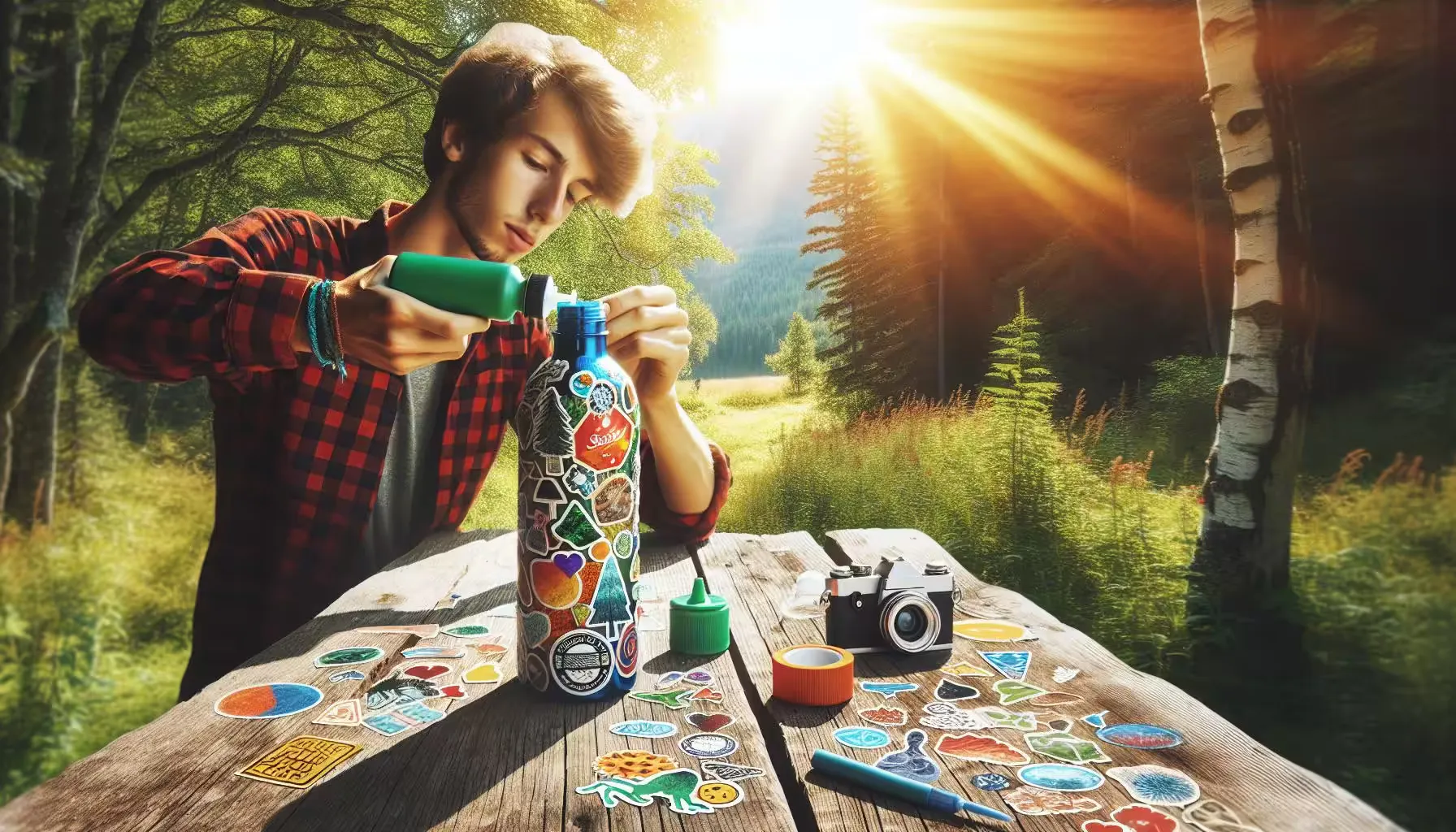
The short version: use a vinyl sticker, put it on a clean dry bottle, leave it alone for a day before it gets wet, and hand-wash from then on. That combination alone outlasts almost anything you can do with a sealant afterwards. Sealants help, but they are a second line of defence, not a fix for a sticker that was applied badly in the first place.
Here is the whole lifecycle — choosing, applying, sealing, washing, and eventually getting them off again without wrecking the finish underneath.
Why stickers fail on water bottles
Three things kill them, and they do it in different ways.
Water at the edges. Adhesive rarely fails in the middle of a sticker. It fails at the perimeter, where water works under a lifted corner and spreads inward. This is why edge quality at application matters more than the adhesive’s rated strength.
Heat. Adhesive softens as it warms. A dishwasher’s dry cycle runs far hotter than anything a bottle sees on a trail, which is why one dishwasher pass can undo months of careful hand-washing. Sun on a black bottle lid does a slower version of the same thing.
UV and abrasion. Sunlight fades unprotected ink — reds and purples go first. Abrasion is the quiet one: a bottle rattling in a pack side-pocket sands the sticker’s high points every mile you walk.
Surface matters too. Smooth stainless takes a sticker well. Powder-coated and matte-finish bottles have a fine texture that leaves microscopic gaps under the film, and those gaps are where water starts.
Start with the right sticker
Most of the outcome is decided before you peel the backing.
- Vinyl, not paper. Paper stickers wick water through the face and pulp at the edges. Vinyl is a plastic film — water cannot pass through it, only around it.
- Waterproof, not water-resistant. Water-resistant means it survives a splash. Waterproof means it survives being submerged and scrubbed. For a bottle, you want the second one.
- UV-stable ink or a UV laminate. This is the difference between a sticker that fades in one summer and one that still reads in three.
For what it is worth, we print ours on heavy-duty waterproof vinyl — scratch-, UV- and weather-resistant, die-cut, with a clear back so the artwork sits flat against the bottle rather than floating on a white rectangle.
Applying it so it actually stays
Nearly every peeling sticker traces back to this step.
- Degrease the surface. Soap and water is not enough on its own — skin oil is the problem, and it survives a rinse. Wipe with rubbing alcohol and let it flash off.
- Make sure it is bone dry. Trapped moisture under the film never evaporates; it just sits there weakening the bond.
- Pick a flat-ish spot. A bottle is a cylinder, so it curves in one direction. Place stickers so they wrap around that curve, not across it. Anything crossing a seam, a weld line, or a taper will tent up at the corners.
- Hinge it. Peel back only the top third of the backing, line up the top edge, press it down, then pull the rest of the backing out from underneath while smoothing downward. This beats peeling the whole thing off and hoping.
- Squeegee from the centre out. A credit card edge works. Push air toward the edges rather than trapping it in the middle. Finish by running a thumbnail firmly around the entire perimeter — that edge seal is the whole ballgame.
- Give it 24 hours before it gets wet. Pressure-sensitive adhesive keeps bonding for about a day after application. Washing a bottle the same evening you decorate it is the single most common way people lose a sticker.
Sealing: what each method is actually good for
A sealant buys you time. None of them make a sticker permanent, and a couple cause problems of their own.
| Method | Effort | Hand-washing | Dishwasher | Watch out for |
|---|---|---|---|---|
| Nothing (good vinyl, well applied) | — | Holds | Usually fails | Edges eventually lift with age |
| Clear nail polish on edges only | 5 min | Holds well | Sometimes | Yellows in sun; leaves a visible brush line if you coat the whole face |
| Mod Podge, 2–3 thin coats | 30 min + drying | Holds | No — standard formulas re-soften when hot and wet | Dries milky over dark art; goes tacky in heat. Use the dishwasher-safe formula if you want any dishwasher tolerance |
| Acrylic spray sealant (UV-rated) | 10 min + full cure | Holds | Sometimes | Needs ventilation and masking; best UV protection of the group |
| Clear laminate sheet over the top | 10 min | Holds | Best of the options | Visible border; very hard to apply bubble-free on a curve |
If you only do one thing, run a thin line of clear nail polish around the sticker’s perimeter and leave the face bare. It targets the exact place failure starts, takes a minute, and does not change how the artwork looks.
Washing a bottle without destroying the stickers
Hand-wash. It is genuinely the whole answer.
Use lukewarm water and mild soap, wash around the stickers rather than scrubbing across them, and skip abrasive pads. Rinse, then dry the sticker area with a towel instead of letting water sit along the edges.
If a bottle absolutely has to go in the dishwasher, the top rack is meaningfully cooler than the bottom and the heated dry cycle is the most damaging part — turn it off if your machine allows. But treat this as damage control. Sooner or later the dishwasher wins.
Getting stickers off cleanly
Eventually you will want a sticker gone, and pulling at a cold one is how people end up scraping adhesive off with a knife.
- Warm it first. A hairdryer on low for 30–60 seconds softens the adhesive. Warm vinyl peels off in one piece; cold vinyl shreds.
- Peel slowly at a shallow angle. Pull back across itself, almost flat against the bottle, rather than straight out.
- Take the residue off with oil, not a blade. Cooking oil, peanut butter, or an adhesive remover on a cloth, left a few minutes, then wiped. Isopropyl alcohol works on stainless.
- Be careful on powder coat. Solvents and acetone strip coloured finishes. Test on the base of the bottle first.
Sealed stickers are harder to remove — that is the trade-off for them lasting. A laminated or Mod Podged sticker usually needs more heat and more patience.
Insulated and powder-coated bottles
Stainless takes stickers well. Powder-coated bottles are the harder case: the finish is slightly textured, so give the surface a longer alcohol wipe, press the edges harder, and expect to seal the perimeter. On matte finishes especially, do not skip the 24-hour cure.
Frequently asked questions
How do I make a sticker waterproof?
You cannot make a paper sticker waterproof — you can only slow the water down. Start with waterproof vinyl. If you want extra protection on top of that, an acrylic spray sealant or a clear laminate sheet gives you a genuine barrier; nail polish around the edge seals the failure point.
Can stickers survive the dishwasher?
Usually not. Heat plus detergent plus pressure is the worst combination there is for adhesive. Laminated stickers have the best odds, and top-rack placement with the heated dry cycle off improves them further, but hand-washing is the only reliable answer.
Why do my stickers keep peeling at the corners?
Almost always one of three things: oil left on the surface, the sticker crossing a curve or seam it cannot lie flat against, or it got wet before the adhesive finished bonding. Corners lift first because that is where water gets purchase.
Does Mod Podge actually work on water bottles?
For hand-washed bottles, yes — two or three thin coats with full drying between them. Standard Mod Podge is not dishwasher-safe and will go tacky if the bottle sits in a hot car. It also dries slightly milky, which shows over dark artwork.
Can I move a sticker after applying it?
Within the first few seconds, sometimes. After that the adhesive has started to bond and lifting it will stretch the vinyl and pick up dust. Decide on placement before the backing comes off.
How do I clean a bottle without damaging the stickers?
Mild soap, lukewarm water, a soft cloth, and wash around the sticker rather than over it. Dry the edges rather than leaving them wet.
Are Lost Canyon Threads stickers waterproof?
Yes. They are printed on high-grade waterproof vinyl and rated water-, UV- and scratch-resistant, which is why they hold up to rain, sun and trail dust without fading. Hand-washing still gets you the longest life out of any sticker, ours included.
Stickers that are built for this
We print our stickers on waterproof vinyl because a sticker that dies in one season is not much of a souvenir. The mountain designs come from real places in the Colorado high country — the same ranges on our tees.